🍁 The Autumn Update
We released Quetoo after nearly 20 years in development back in May. Since then, we’ve pushed over 100 engine releases, 50 game data releases, and well over two thousand commits across Quetoo and its supporting libraries. Progress has been steady and significant. If you haven’t seen Quetoo in a minute, here’s what’s new.
For players
Voice chat
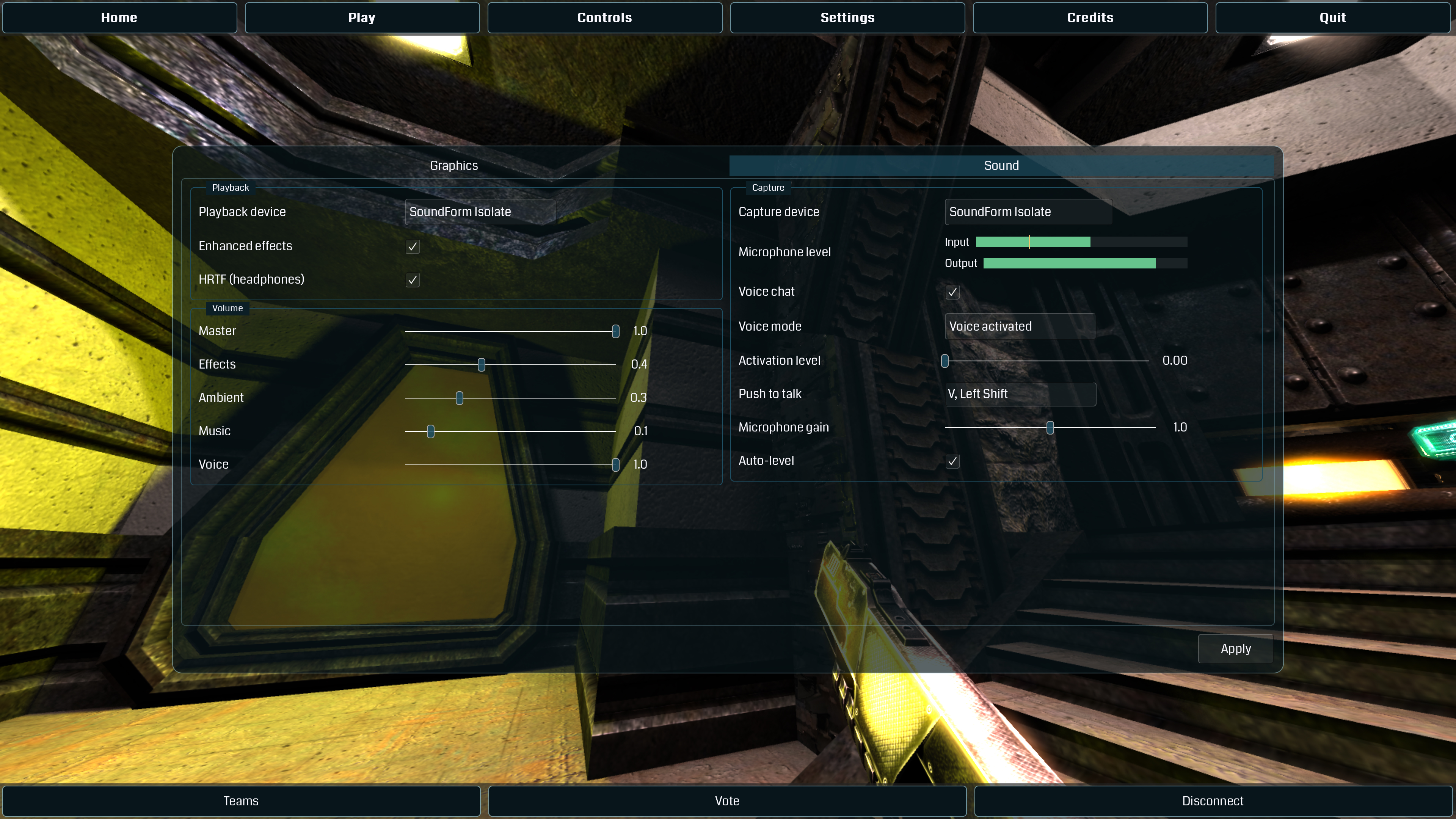
Quetoo now has voice chat, enabled by default on all servers. Choose between push-to-talk or voice activation. Your sound device selection and settings are saved and applied to future sessions. The HUD shows who is currently talking. If someone acts up, you can mute them for yourself, or call a vote to globally mute a repeat offender.
Two new customizable HUDs
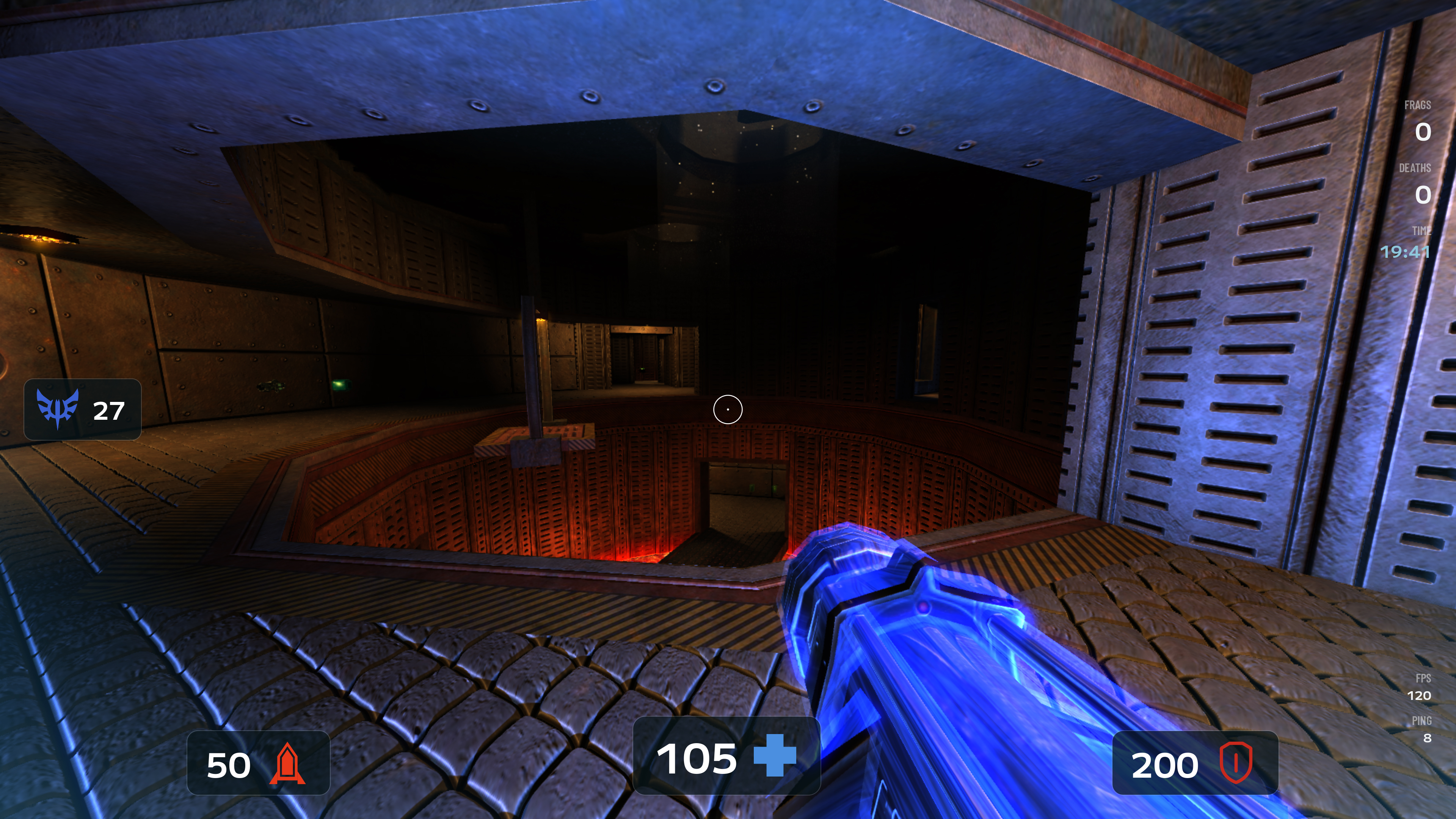
Speaking of the HUD, it’s been rebuilt from scratch with ObjectivelyMVC. It uses JSON and CSS for layout and presentation, meaning the HUD is now user-customizable without touching code. We’ve included two variants out of the box for you to choose from:
- default: The classic layout, with rounded cards and large, crisp fonts. Works well on all screen sizes.
- chrome: Angled cards, anchored along the perimeter, maximizes screen real estate for 16:9 displays.
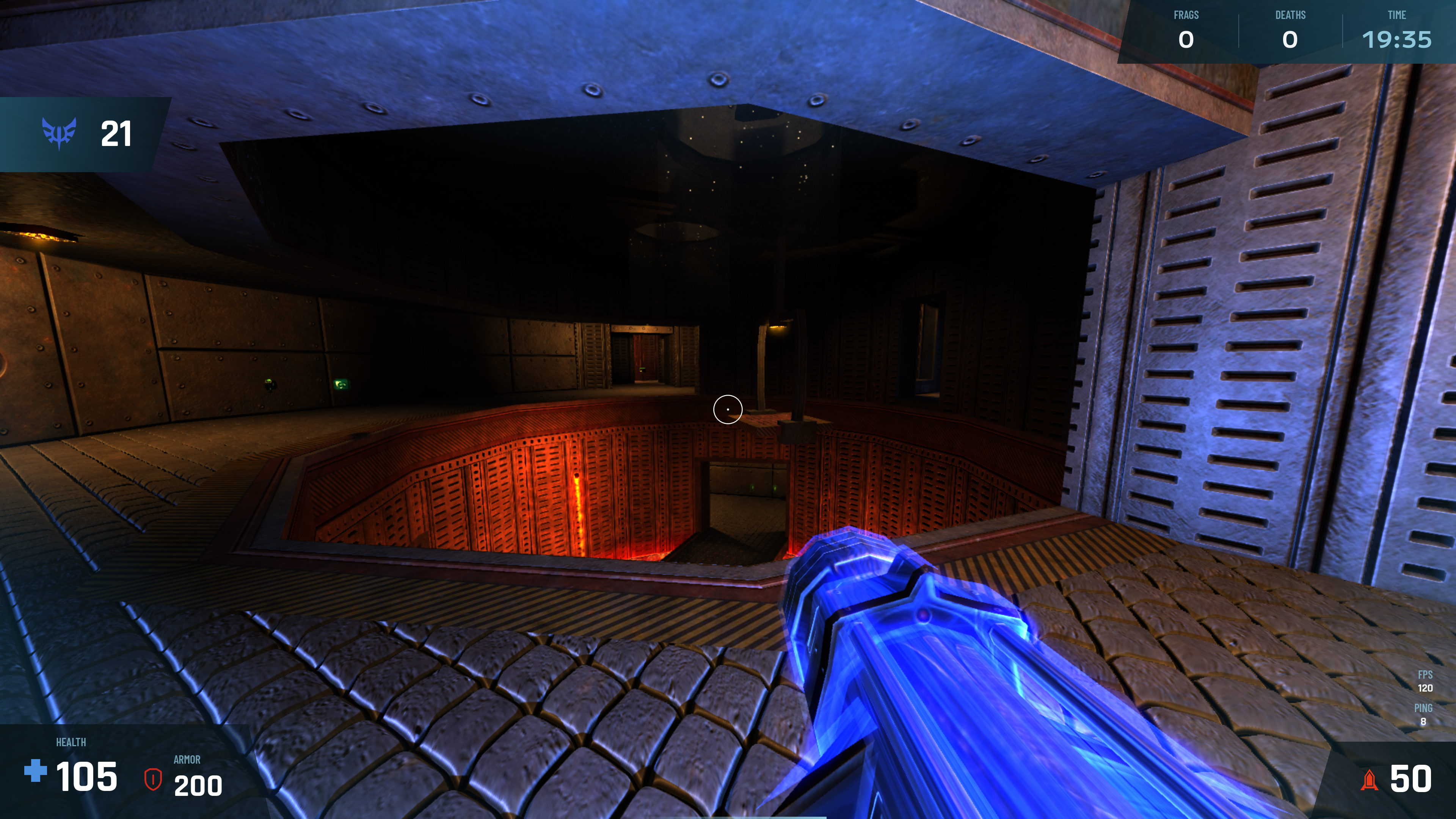
Both HUDs scale and look sharp at any resolution, as all content is vectorized. If neither variant is quite right for you, you can tweak them or even build your own. See For developers and modders.
Portals and reflections
Quetoo can now draw other parts of the world off-screen, and apply those rendered scenes on surfaces in game. To show it off, we’ve added portals, teleporters that you can see through, and reflections on water and glass.
But there are so many other possibilities with this feature: security cameras, mirrors, sky boxes from seemingly other worlds. What will you build with this feature?
Demo tools for content creation
The entire demo system has been rebuilt for ease of use, and new tools added to make content creation with Quetoo easy, right within the game.
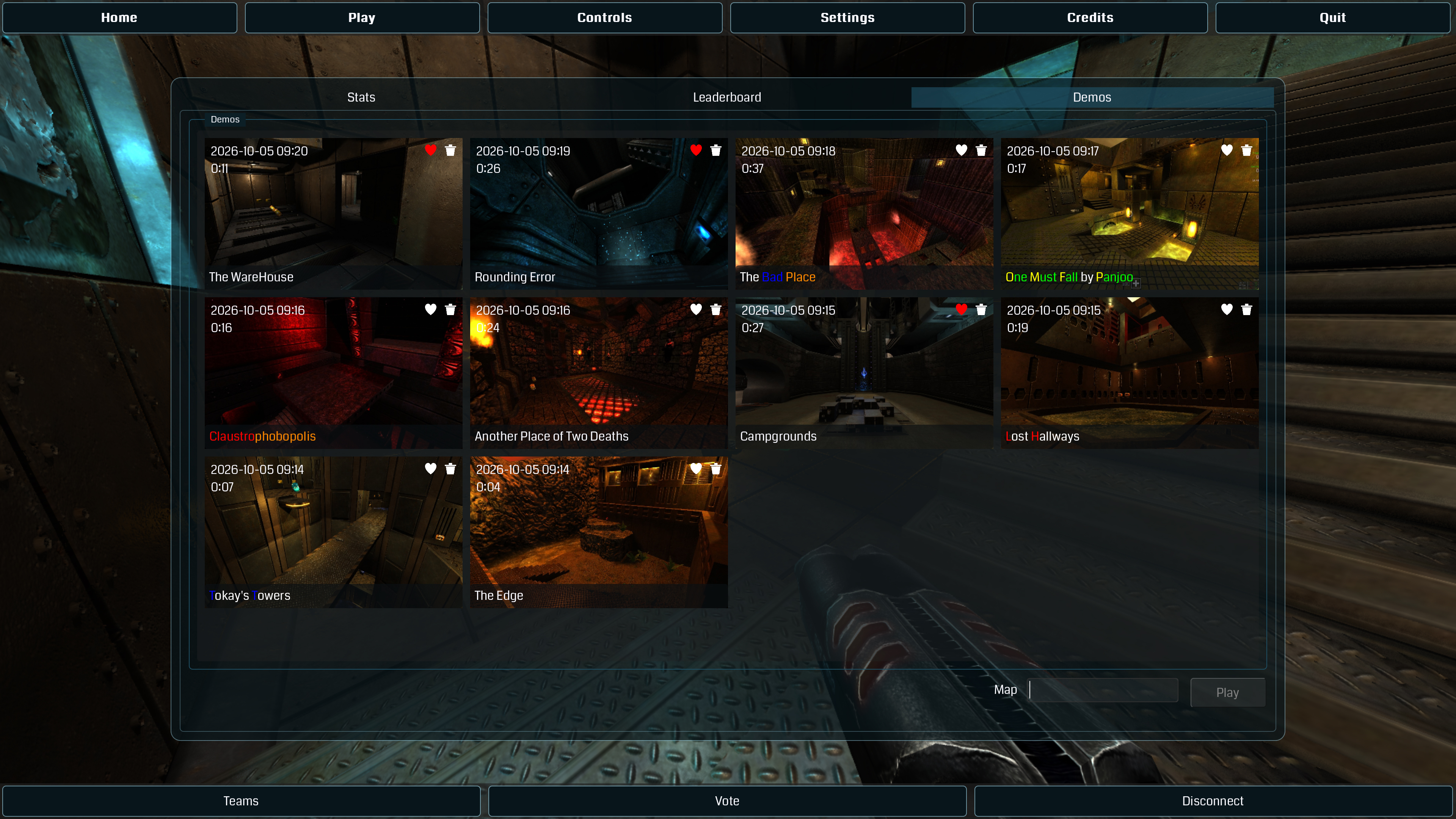
- Demo browser lists your recordings newest first. Give them a title of your own, filter by title or map, mark favorites, and delete the rest.
- Seekable playback. The demo format was reworked to allow you to seek through it like you would a video file. Scrub forward or backward to find the segment you’re looking for.
- Playback controls show up when you pause: rewind, fast forward, the scrubber, a playback speed slider, and single-frame step in both directions. The world holds still while you’re paused, but the camera doesn’t, so you can line up the shot.
- Camera modes. If you ever wanted to change your POV while watching your demos, now you can. First person, third person, orbit and free-flight mode give you everything you could want to find the perfect angle.
New player models
Twelve new player models, complete with player-tintable skins, landed this month. These have been resurrected with love from the ioQuake3 and DeFrag communities and overhauled for Quetoo. Bloodseeker, Gladiator, Mantis, Violator and friends are all in the game now, and you can see ’em all up close in the player model gallery.
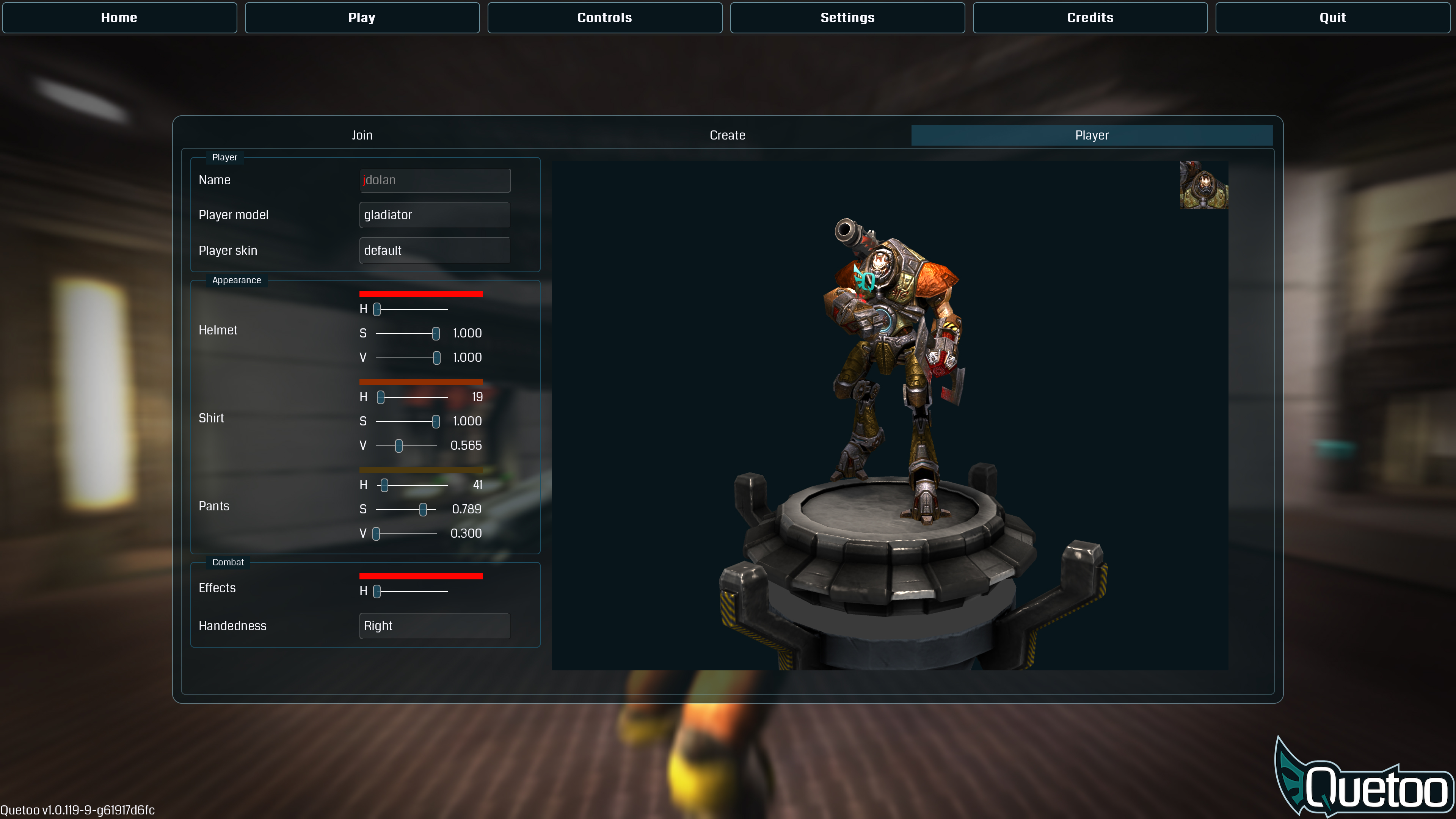
And we finally have a female player sound set, voiced by my talented wife 👰🏻. Turns out I married a voice actor. Who knew!
New maps
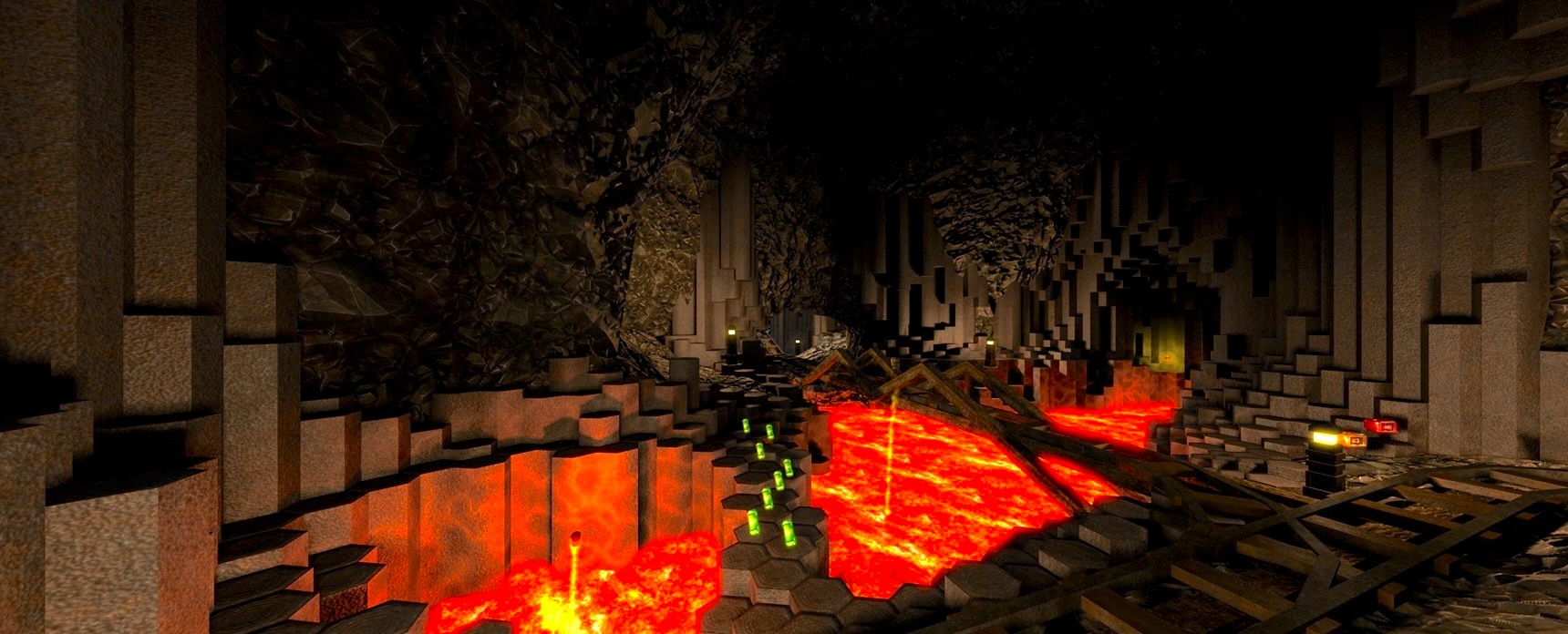
Miner Difficulty is Skies912’s long-awaited cavern mine map. Winding tunnels, rail tracks, mine carts that bank, pitch and accelerate along them, and the coolest original theme in the game by a wide margin.
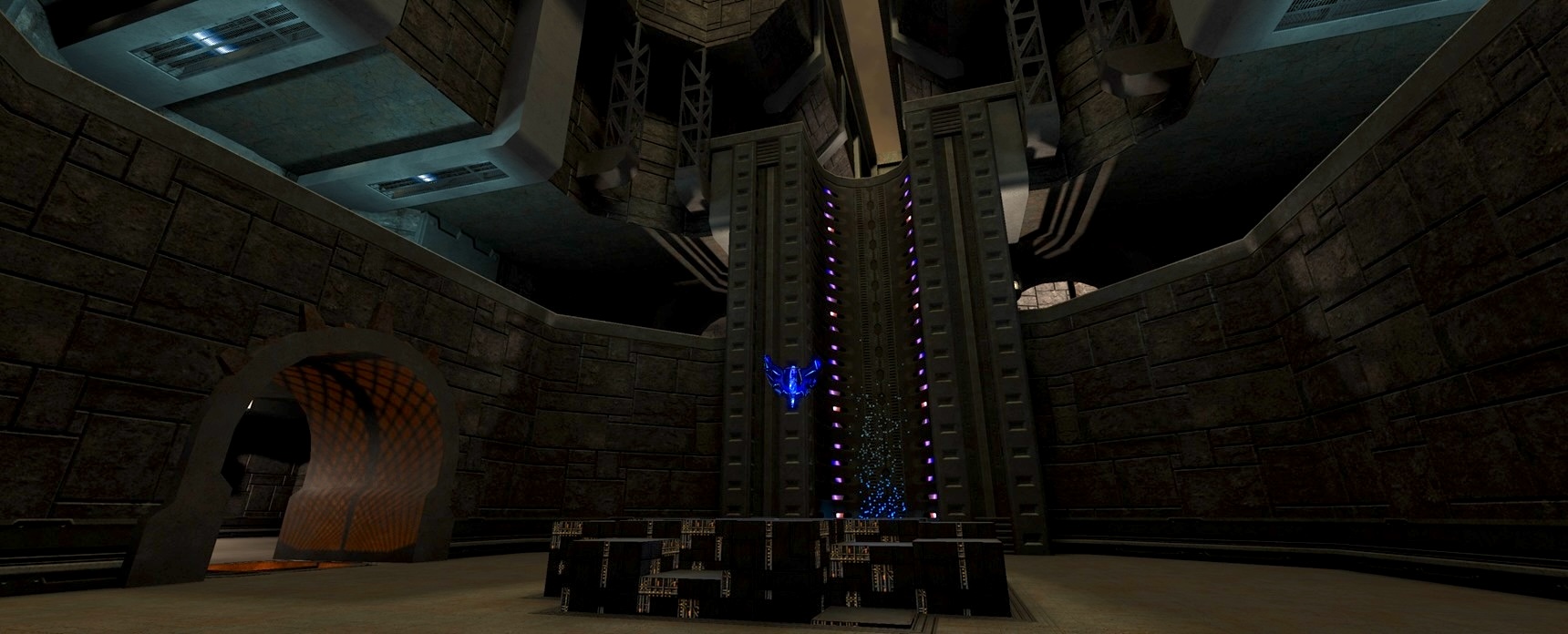
Campgrounds is Skies912’s remake of Q3DM6, based on the Quake Live version, but with Quetoo flourishes. See if you can spot them.
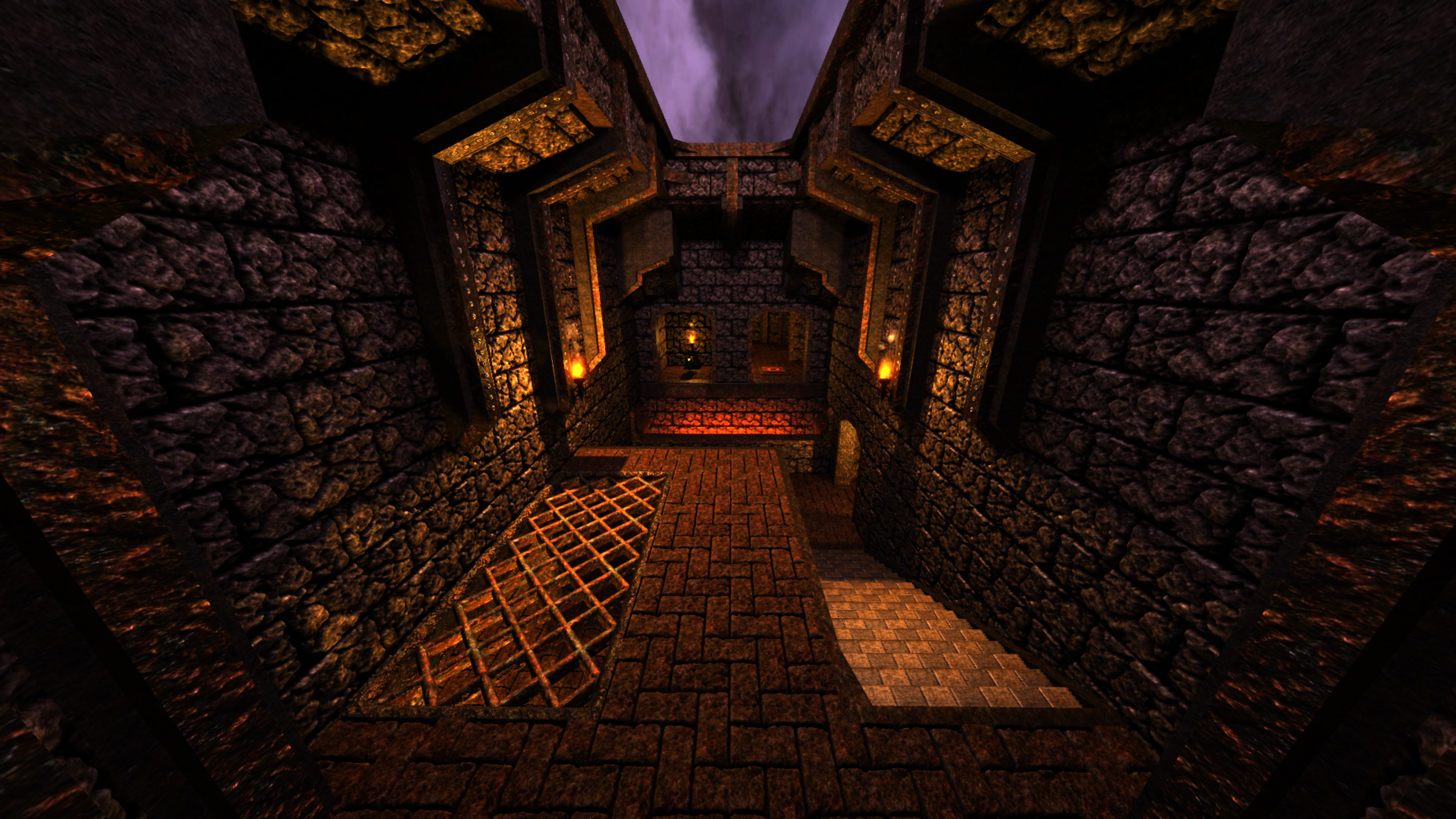
Another Place of Two Deaths is a faithful but complete rebuild of dm1 with over double the brush count of the Quake classic that started it all.
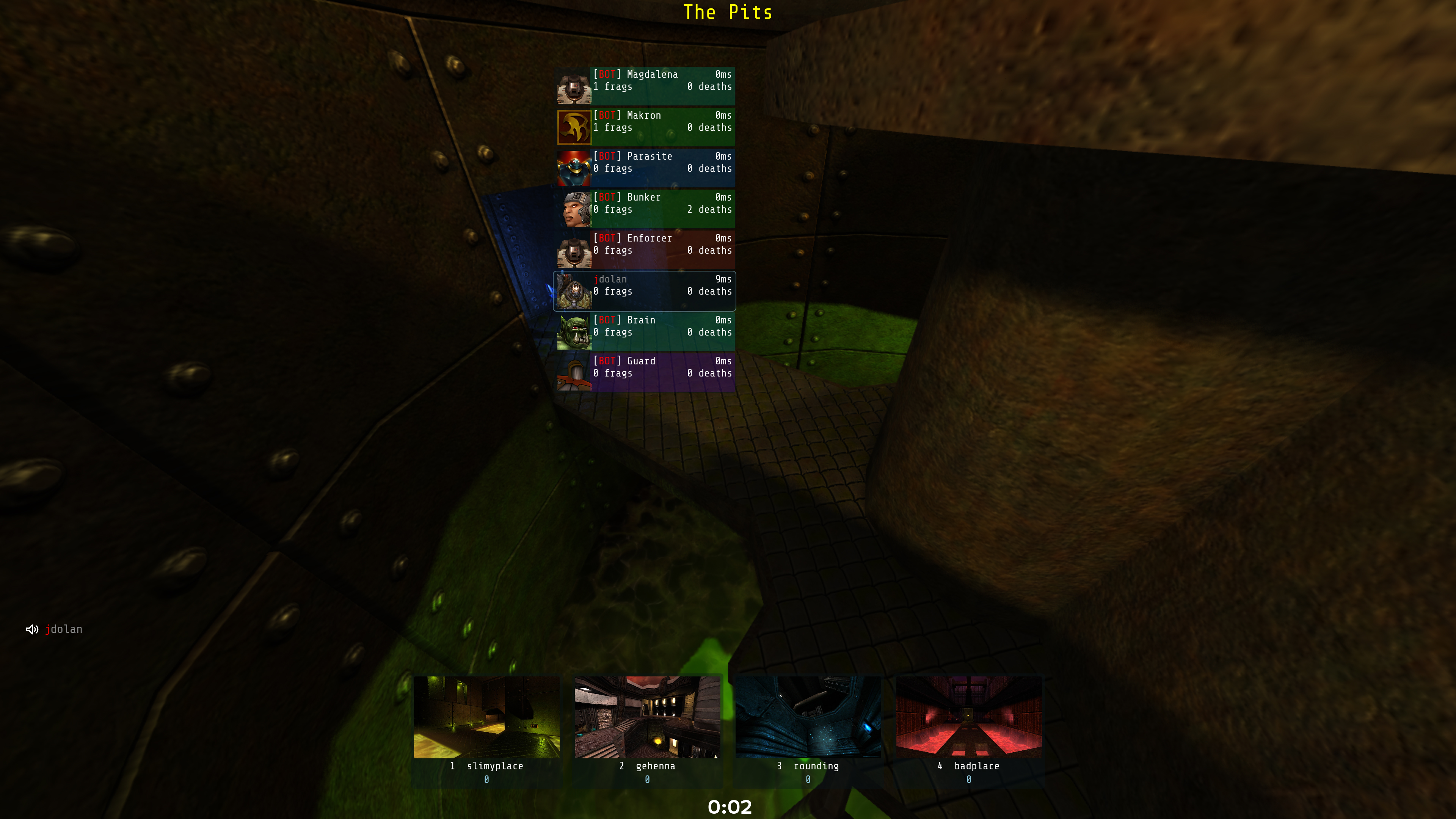
Next Map Voting
When a level ends, the intermission now counts down and shows what’s coming next. Players can vote on the next map by pressing 1-4. You can also vote on the bot count, the frag and time limits, forcing someone to spectate, and muting them.
For mappers
Portals and reflections
Any brush model may render portal faces by specifying the targetname of the view entity (typically an info_null) in its portal key (e.g. "portal" "p1"). Then, simply add a portal stage to the material that should render the portal’s view.
Reflections are simpler. There is no separate view entity required, because the reflective face itself is the view. Simply add a reflection stage on your material and recompile your map. That’s it!
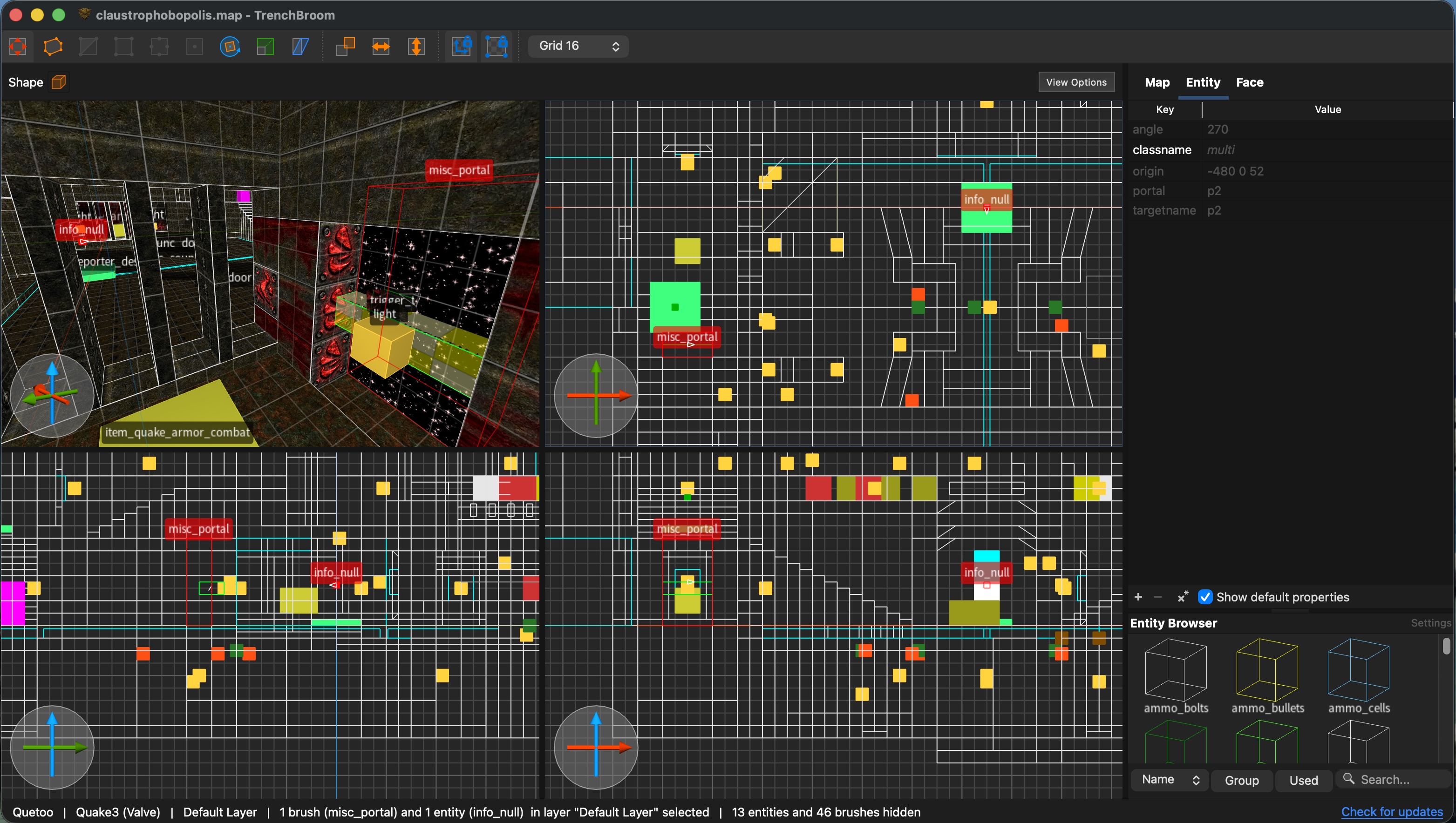
For detailed instructions on creating portals and reflections, head over to the mapping guide.
Alpha-test Shadows
Quetoo’s lighting now honors alpha-test for shadows. Sunlight through foliage, or a floodlight behind a chain link fence, now casts realistic soft shadows.
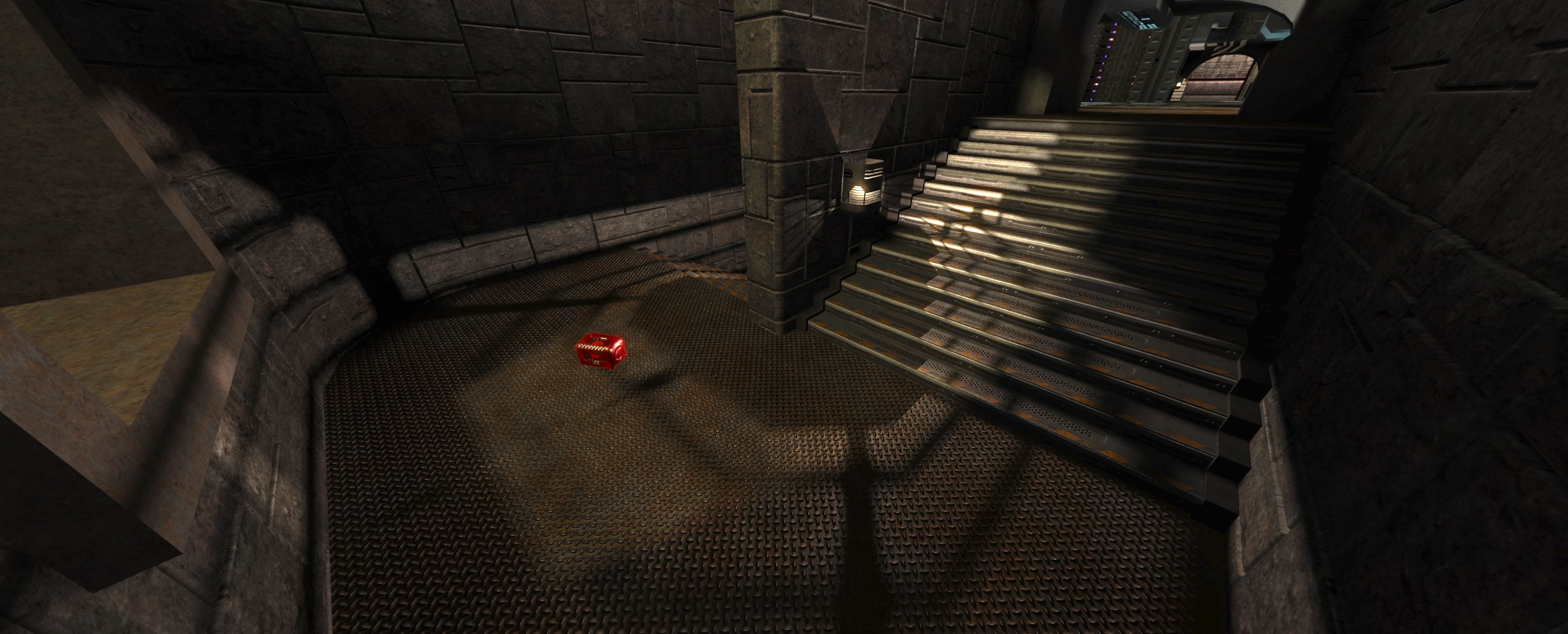
Light fixtures on Campgrounds
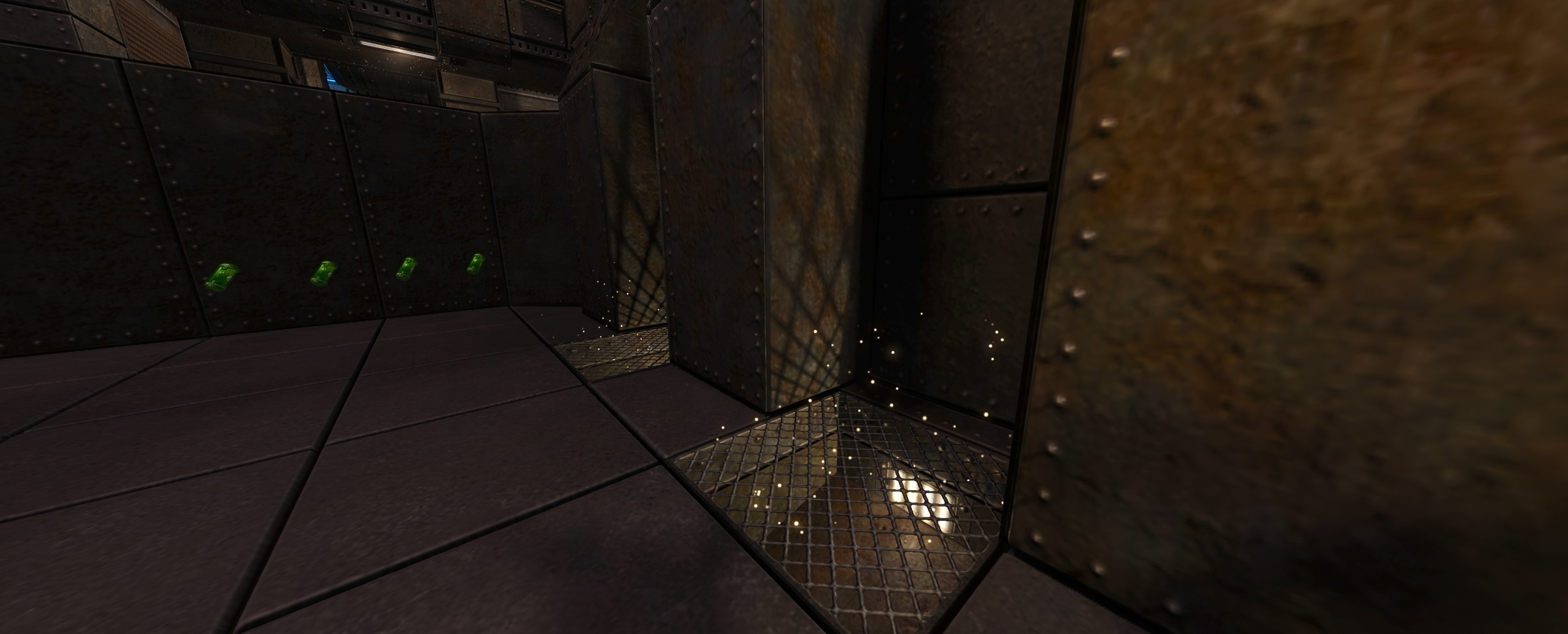
Grates in the floor on Rage
In-game Editor Overhaul
The in-game editor received a ton of love this round. If you have mapped for idTech, but not Quetoo, brace yourself: you’ll never want to go back.
quetoo.exe +set editor 1 +map mymap
This will take you into interactive editing mode. There, you can add, modify and delete entities: place items, tweak plats and doors, sync up your triggers. Most importantly, you can author all lighting for your map in real-time. Light teams make grouping lights and editing them as one a breeze. Gone are the days of guessing at colors and radius in TrenchBroom and Radiant, and endless recompiles to get it looking just right.
And now, in addition to lights, you can edit material stages live. Add and remove stages, toggle effects, try different blend operators, all live on-the-fly. Click save to write any pending .map and .mat changes, recompile with quemap for the optimized result, and you’re done. There is no VIS compile step, either. Typical map compile times are under 10 seconds.
misc_awesome
- Valve 220 is a superior format to Quake2 and Quake3 .map.
quemapnow auto-detects it, the game config prefers it, and every shipped map source has been converted. - Curved patches.
quemaptessellates TrenchBroom patches into the BSP, and the engine renders and collides against them, so arches, pipes and domes are available today. - New entities:
misc_portal,func_bob,ballistics_*traps andturret_*turrets, toggleabletrigger_push, and more. - func_train supports per-corner speed, smooth acceleration, and a heading inferred from the route, which is how Miner Difficulty’s carts follow their rails, approximating a primitive vehicle that drives on a pre-defined path.
For developers and modders
Mod support
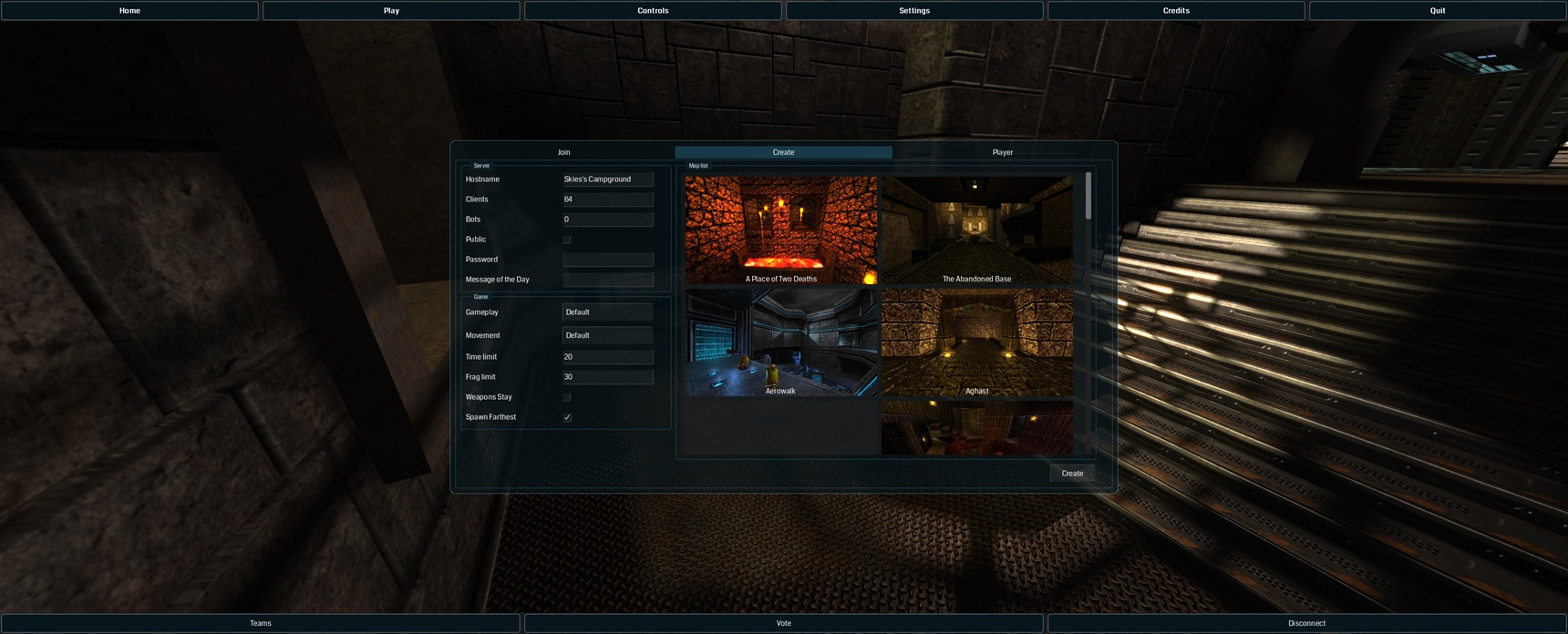
Quetoo 1.0.68 shipped a mod framework, so that a mod no longer means forking the whole game. Gameplay rules are composed from chainable hooks rather than by editing the default game, and shared code is compiled into each module, so nothing breaks when the default game changes shape. Three modules ship beside the default game to prove it: CTF, extracted from the default game; Lithium, written from scratch against the hooks; and Race, a timed-run mod with its own scoring, HUD and replay format.
If you don’t need code, you don’t need a build: shallow mods run with nothing but a .cfg and some maps in your game directory. The full picture is in the mod support docs.
Race, in preview
Race is built on the design, the replay format and the barrier semantics of MovoWR’s community jump mod: checkpoints, a best time per movement, and the record holder’s ghost to race against. There are no race maps or public servers yet, so treat it as something to poke at locally.
Five ways to move
Movement is selectable per server, per level, or per module: Quetoo (the default, and the only one with the grappling hook), Quetoo Race, Quake, Quake II, and Quake III Arena. Set it with the g_movement cvar, from the Create Server menu, or with a movement key on worldspawn. The server browser shows the movement before you join.
Build your own HUD
The HUD from the players section is laid out in JSON and styled with CSS. cg_hud names a directory under ui/hud/ holding JSON layouts and CSS for the HUD, the scoreboard and the intermission, and anything your variant doesn’t ship falls back to the default, so a variant that only changes colors is a single stylesheet. Mods ship their own layouts the same way: CTF adds a captures counter, Lithium the held tech, Race speed and run counters.
Under the hood
The renderer was ported from OpenGL to Metal, Vulkan, and Direct3D 12 via SDL3’s GPU API and our new ObjectivelyGPU library, and it’s faster than the old one on the same hardware. glib is gone, replaced by Objectively 2 collections, and ObjectivelyMVC renders through ObjectivelyGPU on every platform. All three libraries build for iOS and Android. We are not announcing a mobile port, but for the first time, nothing in the stack prevents one.
Tools for model authors
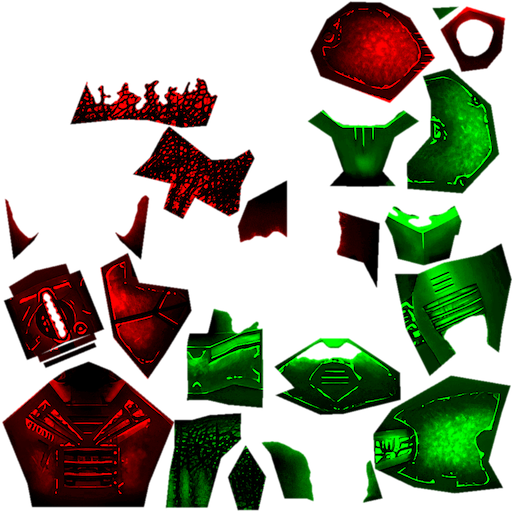
Two new scripts ship in src/tools: md3fu previews animated MD3 player models, and tintfu builds the tintmaps that make a skin tintable and draws UV wireframes for checking them.
For server admins
Update your servers. Linux packages are now split into quetoo-client and quetoo-server for Debian and Red Hat, so a VPS install pulls no graphics libraries, and arm64 Linux tarballs are published alongside x86_64. Public servers report frags to giblets.quetoo.org, which feeds the leaderboard. Set sv_statsUrl to 0 to opt out.
Thank you
To everyone who filed a bug, tested a snapshot build, joined a pickup game on Discord, or shipped a map: this is your update too. Special thanks to Skies912 for Miner Difficulty, Campgrounds and his other maps in flight, to MovoWR, whose jump mod forced our hand with proper mod support 😄, to the ioQuake3 and DeFrag communities for their player models that still look great so many years later, and to my wife, for lending the arena her voice.
See you in the arena. 🔫 🚩
—jdolan
- Downloads: quetoo.org/downloads
- Discord: discord.gg/unb9U4b
- GitHub: github.com/jdolan/quetoo
- Release notes: Quetoo · Quetoo Data · Objectively · ObjectivelyGPU · ObjectivelyMVC